Actun Tunichil Muknal is rated 4/5, “Vigorous”, by the Belize Tourism Board and by every licensed operator I have walked it with. That rating is honest. This is a wet, guided, full-contact cave expedition, not a walk-through attraction with handrails and a gift shop at the far end.
So here is the blunt version before the nuance. If you can hike two miles on uneven ground, swim roughly 20 feet with a life vest on, and duck through a rock slot the width of a supermarket trolley, you will manage. If you cannot weight-bear on slick rock, or enclosed water makes your chest tighten, don’t book it. No shame either way. I have watched grown men in good trainers turn round at the entrance pool and be perfectly content with the decision.
Nothing inside ATM Cave requires athleticism. It requires nerve, decent shoes, and the honesty to tell your guide you are nervous before you get wet.
What “difficult” actually means in practice
Vague difficulty labels are useless, so let me break the day into its four real physical demands. None of them is extreme. Stacked together, they add up to something most moderately active adults can finish and quite a few will find harder than expected.
- The approach hike. About 45 minutes each way on flat but relentlessly humid jungle trail, with three wades across Roaring Creek. The path is not steep. It is rooty, muddy, and hot, and you do it in wet shoes.
- The entrance swim. A short 20-foot crossing of a spring-fed pool into the cave mouth. Life vest on, helmet on, headlamp lit. You will be in the water for perhaps fifteen seconds.
- Ninety minutes of upstream wading. Ankle-deep in places, chest-deep in others, always moving against a gentle current over slick bedrock and submerged boulders.
- The climb into the dry chamber. A wet 12-to-13-foot metal ladder (guides call it “the elevator”) followed by a 6-to-8-foot boulder scramble. Three points of contact, minimum, all the way.
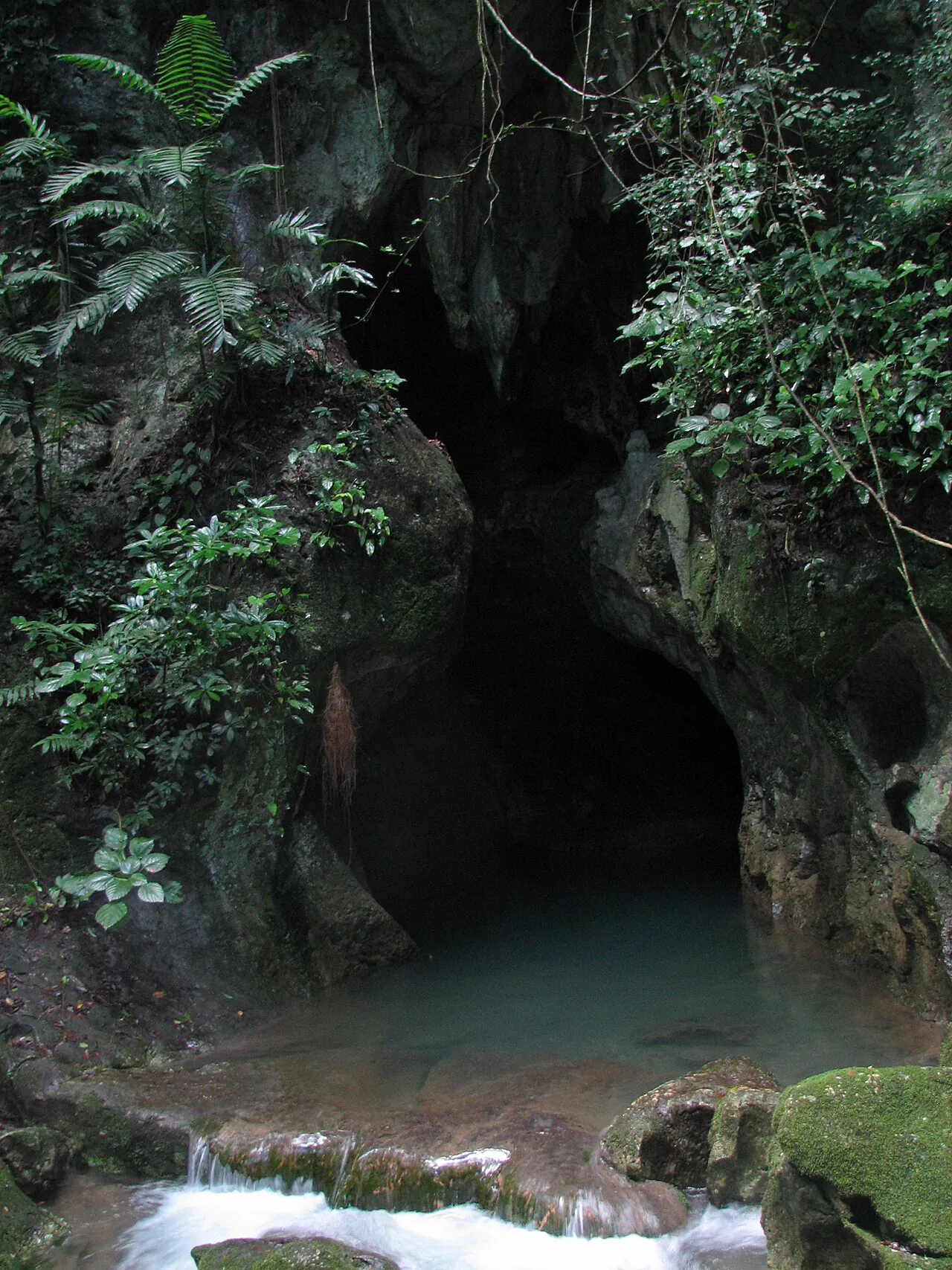
Do you have to swim in ATM Cave?
No. You do not need to be a strong swimmer to do ATM Cave. Life vests are mandatory in every river section, and guides routinely tow nervous non-swimmers across the two genuinely deep stretches on their backs, one arm hooked under the armpits. It looks undignified. It works beautifully.
Here is the geography of it, because “do I have to swim” is really a question about where your feet leave the floor. Two places only: the entrance pool crossing and one short corridor just inside the main gallery. Everywhere else you are walking, wading, or shuffling on your backside. The water is 78°F (about 26°C) by my own thermometer, though one guide I trust insists it reads closer to 22°C on his gauge. Either way it is warmer than a Cornish sea swim in June, and you stop noticing after the first ten minutes.
Say it out loud at the trailhead. “I’m not a confident swimmer” is the single most useful sentence you can offer your guide, and it changes how the whole group is marshalled through the wet sections. Hardly anyone takes that ten seconds, and then they suffer in silence for three hours. Right then, onto the water itself.
Water depth, current and footing: the honest version
River levels shift with rainfall, so treat this as a typical-conditions guide rather than a guarantee. The Institute of Archaeology closes the cave outright when the subterranean river runs too high, which tells you everything about how quickly the picture can change.
| Section | Typical depth | Footing | What it actually feels like |
|---|---|---|---|
| Roaring Creek crossings (approach) | Knee to waist; occasionally neck-high after heavy rain | Slippery cobbles, current pushing at your shins | Cold, refreshing, over in seconds |
| Entrance pool | Chest-deep to over your head at the swim line | No bottom contact for the crossing | Clear spring water, vest mandatory, brief |
| Subterranean river, main gallery | Ankle to chest | Slick bedrock and hidden boulders | Ninety minutes of steady upstream wading |
| Optional exit squeeze | Neck-deep | Tight rock slot with a wide bypass alongside | Ten seconds of “hmm”, then laughter |
Three hours wet is its own small challenge. Feet go soft, hands go wrinkly, and the walk back out along the jungle trail feels twice as long as the walk in. Bring a dry bag and a full change of clothes for the vehicle. You will thank yourself within about four minutes of leaving the water.
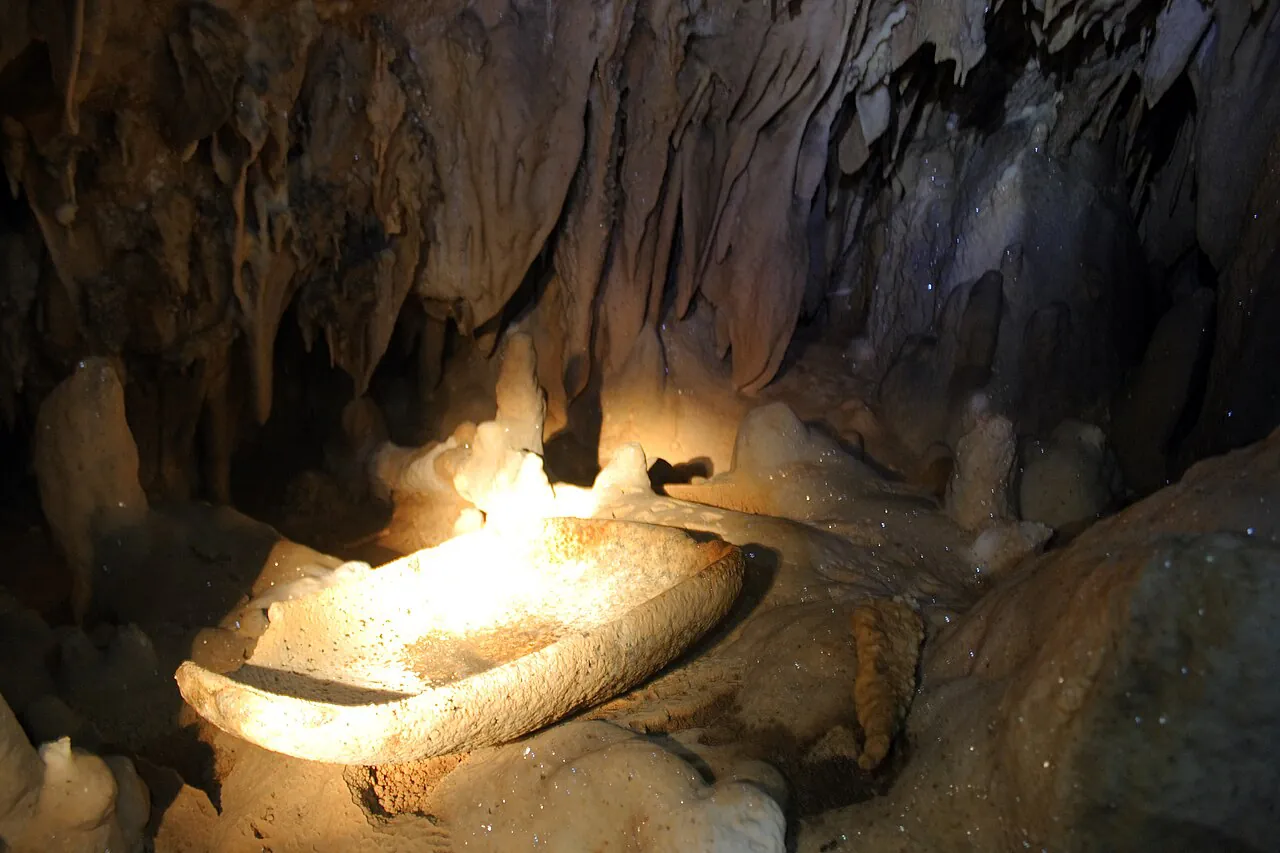
Claustrophobia: an honest map of the tight spots
There are three choke points, and only one of them is genuinely narrow. Knowing them in advance does more for a nervous visitor than any amount of pep talk.
- The entrance swim corridor. Your first minute inside is a low, wet passage with the ceiling close enough to touch. It opens out quickly, but it is front-loaded, which catches people off guard.
- The ladder. A single-file climb up wet metal into the cathedral chamber, with the next person waiting below you. It is exposure rather than tightness that gets people here.
- The exit squeeze. A neck-deep rock slot that some guides call the decapitation path, purely for effect. It is 100% optional and there is a wide, open bypass right beside it. Nobody will think less of you for taking the bypass. I take it most visits, usually while claiming I am “keeping the group moving”.
The trick is entirely in the telling. A licensed guide who knows you are uneasy will put you second in line, keep a hand on your vest, and talk you through each squeeze before you reach it. That is the whole system, and it works. If confined spaces trigger genuine panic attacks rather than mild discomfort, though, be honest with yourself before you pay. No guide can fix a phobia inside a cave, and the exit is not quick.
A self-test for fitness before you book
“Moderate fitness required” is marketing language. Here are concrete benchmarks instead. Try them at home, ideally in the shoes you plan to wear, and answer honestly.
- Can you climb a ladder with wet hands, without using the handrails on either side?
- Can you walk for a full hour in soaked shoes without stopping?
- Can you crouch, shuffle sideways through a gap, and stand again without leaning on a wall?
- Can you get up off the floor without using your hands?
- Can you climb three flights of stairs at a conversational pace?
- Can you tolerate cold water on your chest for thirty seconds without gasping?
Four out of six, and you will be fine. Fewer than that, and I would look hard at a drier alternative, because the group moves at the slowest person’s pace and everyone knows it.
How dangerous is ATM Cave, really?
ATM Cave is not a dangerous place by adventure-tourism standards, but it is an unapologetically physical one. Bruises and grazes are common. Serious injury is rare. Most ATM Cave accident reports, when you dig into them, are shin-bangings on submerged boulders, slips on the wet ladder, and twisted ankles on the jungle approach.
The pattern of minor injury is predictable. People rush the ladder. People wear the wrong footwear and pay for it on the slick rock. People bump helmets on low ceilings because they are looking at the pottery rather than the roof. Slow down, take three points of contact, and most of that list evaporates.
The safety kit you are issued, and the ratio that protects you
Every visitor is issued a helmet, a headlamp, and a life vest at the trailhead fitting station. Nothing is optional and nothing is charged extra. The bigger safety factor, though, is human: the current cap is eight guests per licensed ATM guide, and it is enforced rather than suggested.
What you are given
- Helmet with a working headlamp (test it at the station)
- Life vest, fitted and mandatory in all river sections
- A licensed guide carrying the only waterproof dry bag in the group
- A briefing on the wet sections before you enter
What protects the cave
- Eight-to-one guest-to-guide ratio, strictly enforced
- Only 62 guides in Belize hold the specialist ATM licence
- Daily visitation capped at around 125 visitors
- One morning wave only, with zero afternoon departures
Those numbers matter more than any marketing claim. Sixty-two licensed guides working in rotation, capped group sizes, and a hard limit on daily tickets mean the cave is never crowded in the way that Maya ruins can be. It also means you should book your tour well ahead rather than turning up hopeful in San Ignacio.

Who should genuinely skip ATM Cave
This list is a recommendation, not a warning label. If any of it applies to you, the honest answer is to choose a different Cayo day out.
- Pregnant travellers, at any stage
- Anyone with a heart condition or uncontrolled blood pressure
- Recent major surgery, or a healing fracture
- Back, knee, ankle, or hip problems that affect weight-bearing on uneven ground
- Walking disabilities of any kind: there is zero wheelchair access, and no part of the route is adapted
- Severe claustrophobia, as opposed to mild nerves
- Anyone who cannot get up off the floor unaided
The National Institute of Culture and History sets the operating rules and the closure decisions, and its policies page is worth ten minutes of your time before you book anything.
Children, height minimums and group pacing
The minimum height is 40 inches (102 cm), and children under five are not permitted at all. Ages five to nine are assessed case by case, with ten to twelve and up being the realistic sweet spot. One Hopkins-based operator enforces a stricter 42-inch minimum, so check before you pay if you are travelling with a small child.
Group fit matters as much as individual fitness. You move at the pace of the slowest person in your eight, and inside a cave there is no overtaking lane. If you are travelling with someone who needs to stop often, book a private departure and let them set the rhythm. It costs more and it is worth every quetzal.
Gear that is safety equipment, not fashion
Closed-toe shoes with real tread are non-negotiable and will be checked at the trailhead. Flip-flops, Crocs, and thin sock-style water shoes are barred outright. Socks are equally mandatory, because you remove your wet shoes at the top of the ladder to protect the calcified floor of the upper chamber.
The dress code catches people out too: sleeved shirts and mid-length shorts or trousers, no tank tops, no bikini-style tops, for men as much as women. Sunscreen and insect repellent cannot be worn into the cave water, since the runoff damages the ecosystem and the artefacts. Cameras, phones, GoPros, and smartwatches are banned by law inside. The full checklist lives on the visitor rules page, and it is worth reading before you pack.
Flooding, closures and cancellation terms
ATM admits visitors in a single morning wave, which means a closure wipes your entire day rather than delaying it. NICH closes the cave when river levels rise, sometimes overnight, sometimes while you are eating breakfast. There is no afternoon session to fall back on.
Two practical consequences. Book ATM early in your Cayo stay so a washout still leaves you room to reschedule, and get your operator’s rain-refund policy in writing before you pay a deposit. Some refund in full, some rebook, some offer a credit. Also confirm your pickup point and timing on the transport page, because the earliest departures leave San Ignacio around 7:00 AM to reach the cave mouth before the main 10:15 AM wave.
The paperwork that is part of the safety system
Every visitor signs a liability release on arrival, declaring medical conditions, medications, allergies, and emergency contacts. Parents or guardians sign for minors. Your full name, date of birth, nationality, and email go to your operator 24 to 48 hours ahead for registration with the Institute of Archaeology, and you must carry the matching passport or photo ID to check-in.
It feels bureaucratic at 6:30 AM. It is also how a guide knows, before you enter the water, that someone in the group has a dodgy knee or a heart murmur. Fill it in properly. And if you want to stay close to the reserve rather than driving in from town, Pook’s Hill Lodge in Teakettle Village sits a two-minute walk from the Tapir Mountain Nature Reserve boundary, which makes an early trailhead meetup genuinely civilised.
Frequently asked questions about ATM Cave safety
How difficult is ATM Cave?
ATM Cave is rated 4/5, “Vigorous”, by the Belize Tourism Board, and that rating is accurate for a wet, guided expedition lasting roughly three hours underground. The demands are cumulative rather than extreme: a 45-minute humid jungle hike with three river wades, a 20-foot entrance swim, 90 minutes of upstream wading, then a wet 12-to-13-foot ladder and a boulder scramble. Moderately active adults manage comfortably. Anyone who cannot weight-bear on slick rock should choose a drier alternative.
Is ATM Cave dangerous?
ATM Cave is not dangerous for reasonably fit visitors, with bruises, grazes, and bumped helmets being far more common than serious injury. The realistic risks are shin-bangs on submerged boulders, slips on the wet metal ladder, and twisted ankles on the jungle approach. The protections are solid: mandatory helmets and headlamps, life vests throughout, a cap of eight guests per guide, only 62 specialist-licensed guides in the country, and a daily visitor cap of roughly 125. Serious incidents are rare and almost always traceable to rushing.
Can claustrophobic people do ATM Cave?
Mildly claustrophobic visitors usually manage ATM Cave well, but genuine panic attacks make it a poor choice, since the exit is neither quick nor optional once you are deep inside. There are only three tight points: the entrance swim corridor, the ladder, and the optional exit squeeze. That last one has a wide open bypass beside it, and taking the bypass is completely normal. The decisive factor is telling your guide in advance so they can put you second in line and talk you through each section.
What is the minimum age and height for ATM Cave?
The minimum height is 40 inches (102 cm) and children under five are not permitted at all, with ages five to nine assessed case by case. Ten to twelve and upwards is the realistic range, and one Hopkins-based operator enforces a stricter 42-inch minimum, so confirm before booking. Height matters more than age here, because the ladder and the boulder scramble reward reach and confidence rather than enthusiasm.
What happens if it rains or the cave floods?
If river levels rise, the Institute of Archaeology closes ATM Cave entirely and your tour is cancelled, often with very little notice. Because the cave runs a single morning wave with no afternoon departures, a closure costs you the whole day rather than an hour. Book your tour early in your Cayo stay so you have room to reschedule, and get the operator’s rain-refund policy confirmed in writing before paying a deposit.
Do I need travel insurance for ATM Cave?
Travel insurance covering adventure activities is strongly advisable for ATM Cave, because standard policies often exclude cave exploration and wading unless it is named. Check that your policy lists cave tours or adventure sports explicitly, and that it covers medical evacuation within Belize. The mandatory liability release you sign at the trailhead protects the operator, not you, so your own cover is the one that matters if a shin-bang turns into something worse.
For the archaeology itself, the Maya history page covers the Crystal Maiden and the ritual story. For the physical walkthrough, start with what the cave is actually like inside. And if you are still weighing up whether it is worth the money and the early start, the worth-it and what-to-wear guide is the honest reckoning. Nervous about caves generally? The Belize cave safety primer covers the wider picture across Cayo.