Every dry season, somebody drives a rental Suzuki up the seven-mile dirt track to Tapir Mountain Nature Reserve, clutching a printed confirmation and a hopeful expression, and gets politely turned around at the ranger checkpoint. It happens often enough that guides have shorthand for it. Actun Tunichil Muknal is not a ruin you can wander into on a whim.
The rules below are not invented by tour companies to sound official. They come from the Institute of Archaeology, which sits under the National Institute of Culture and History, and they exist for three reasons: to keep people safe in moving water, to protect a floor that took millennia to form, and to keep 1,400-odd ceramic vessels exactly where Maya hands left them. Break one and you will not be scolded. You will simply be stopped.
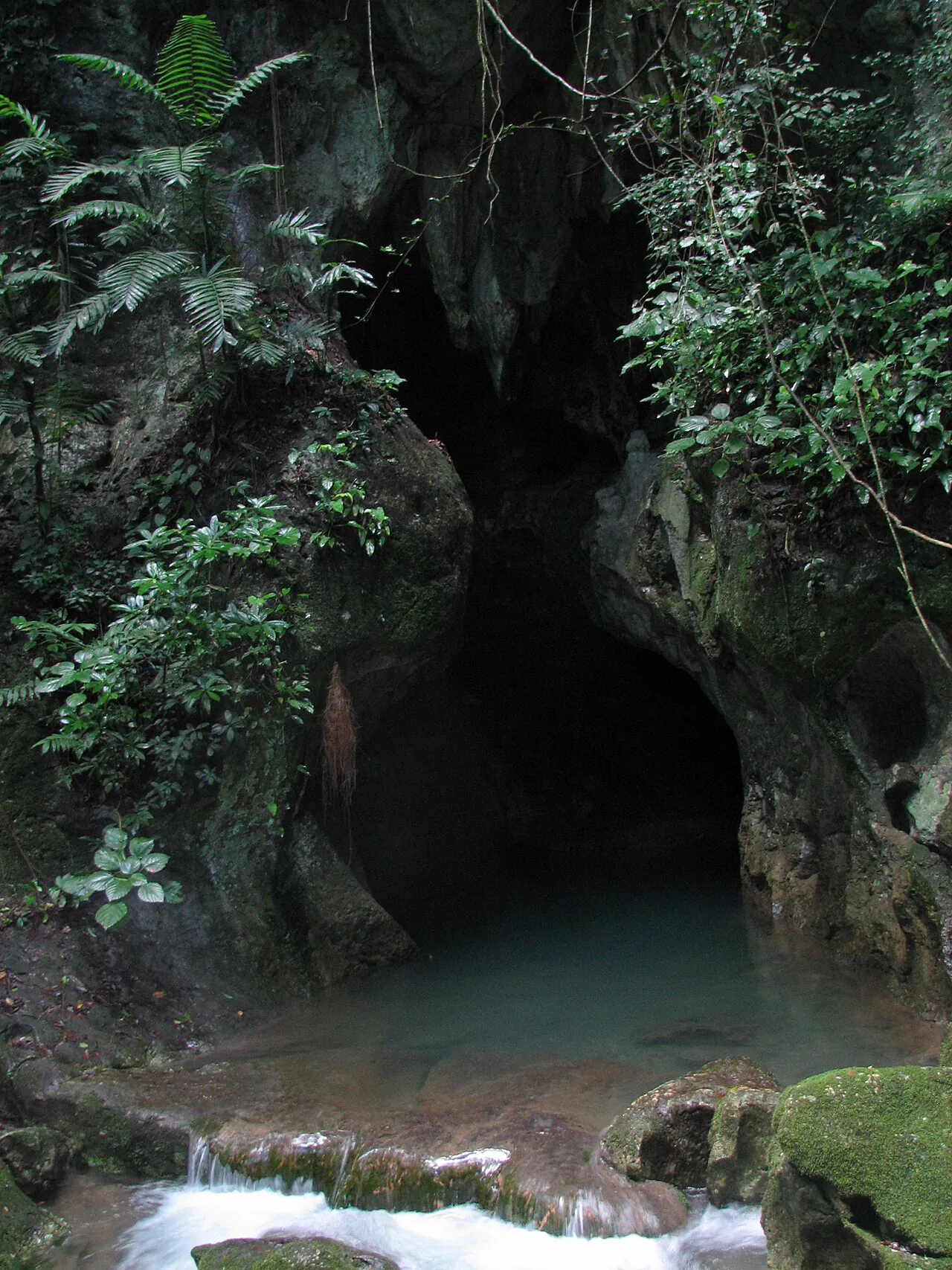
The Rule That Governs All Other Rules — No Independent Entry
Belize’s National Institute of Culture and History releases ATM permits to licensed tour operators in San Ignacio, and nowhere else. There is no ticket window at the reserve gate. There is no freelancer waiting by the trailhead with a spare helmet. Rangers work from a manifest, not from charm, and a walk-up visitor with cash in hand will be sent back down the road.
Each permit covers a single visit and is void the moment you pass the gate, so a “come back tomorrow on the same ticket” arrangement is not a thing. Under the NICH terms and conditions, tickets carry a six-month validity from purchase and are invalidated on entry. Your operator handles all of it. Compare what each package includes on the tickets and tours page before you commit, because the permit is bundled into the tour price rather than sold separately.
Who May Guide You — Licensing, Ratios and the Daily Cap
Here is the detail that catches people out: a Belizean cave licence is not an ATM licence. Only 62 guides in the entire country hold the specialist endorsement, and the rest are legally barred from leading you past the entrance. Ask your operator for the guide’s name and confirmation of both the Belize Tourism Board licence and the ATM certification. A reputable company will answer in one email without huffing.
| Requirement | Current Rule | What It Means For You |
|---|---|---|
| Guests per guide | Maximum 6 (reduced from 8) | Groups of 7 or more split across two guides but usually share one van |
| Groups per guide per day | One | Your guide is fresh, not on their third descent |
| Daily visitor cap | Around 125 across all operators | High-season dates sell out; book before you land |
| Afternoon departures | None | Everyone enters in a single morning wave |
| Certified ATM guides | 62 nationwide | Verify the endorsement, not just the company licence |
| NICH entrance fee | BZ$60 (US$30) per non-resident | Normally folded into the tour price, not paid at the gate |
Because everyone enters in one morning wave, the cave has a rhythm. San Ignacio operators typically roll out between 6:30am and 8:30am, which puts most groups at the cave mouth around 10:15am. If you want the Cathedral chamber before the crowd, book an operator running a 7:00am departure such as Cayo Inland Expeditions, or stay out near the reserve itself. Pook’s Hill Lodge in Teakettle Village sits roughly a two-minute drive from the reserve boundary, which turns a 75-minute highway transfer into a lie-in.
The Paperwork You Must Complete Before You Get Wet
Registration is not a formality. Your operator submits your details to the Institute of Archaeology 24 to 48 hours ahead, and the rangers check them against your ID at the checkpoint.
- ID manifest: exact name as printed on your passport, date of birth, nationality and email address, submitted in advance.
- Physical ID on the day: your passport or a government photo ID. A photo of your passport on a phone is not accepted.
- Liability release: the official ATM Cave Liability Release Form, signed on arrival, including pre-existing conditions, medication, allergies and an emergency contact.
- Minors: a parent or legal guardian must sign on the child’s behalf. Unaccompanied teenagers cannot self-sign.
Name mismatches are the quiet killer of a good morning. If you booked as “Katie” and your passport says “Katherine”, fix it with the operator the day before rather than at the barrier. Rangers are not being difficult; they are matching a government manifest to a government document, and a mismatch can mean a delayed entry or a wasted seat in the van. Bring the same ID you registered with, and bring it dry.
Footwear — The Closed-Toe Rule and What Genuinely Works
Closed-toe shoes with real tread are mandatory, and they will be soaked within the first ten minutes. The entrance pool is a swim, the river crossings come up to your thighs or higher, and the cave floor is a mess of submerged boulders under tannin-dark water. You will not see the rock that finds your shin.
- Works: trail runners with drainage, closed-toe hiking sandals from Keen or Merrell, lightweight hiking boots you do not mind drowning.
- Banned at the van: flip-flops, open-toe sandals, Crocs, and thin sock-style water shoes with no structure.
- Rookie error: brand-new boots. Wet leather plus a 45-minute jungle hike equals blisters by lunchtime.
Water sits around 21°C, which sounds kind but saps heat over three hours. Wool or synthetic socks under those shoes make a bigger difference than most people expect, and they double as the next mandatory item on this list. If you bruise easily, wear trousers you can roll to the knee; the shin-bashing happens in the shallow sections where you are wading and watching your feet instead of the ceiling.
Socks — The Oddest Mandatory Item in Belize
At the top of the ladder you take your wet shoes off. Your socks stay on. This is not a suggestion, and it is the rule visitors query most, usually while holding a single damp trainer and looking betrayed.
The reason is the floor. Beyond the ladder lies a dry chamber coated in calcite flowstone that grows at a geological crawl, and bare feet grind it away in a season. From there you walk 200 to 350 metres along a red-taped path in socks only, past vessels that have not moved in more than a thousand years. Thin cotton socks go straight through at the toe and heel, and cold calcite is unforgiving on tired arches. Bring thick ones, wool or a dense synthetic blend, and treat them as part of the ticket.
Right then, the practical bit: pack two pairs of thick socks. One for the cave, one dry pair for the drive home. Nobody has ever regretted the second pair, and plenty have regretted skipping the first.
The Modesty Dress Code, Plainly Stated
Sleeved shirts and mid-length shorts or trousers, for men and women alike. Tank tops, spaghetti straps and bikini-style tops are refused. Guides enforce this at the van in San Ignacio, before you have committed an hour of driving, which is the kindest possible moment to be told.
Two things are happening at once. Actun Tunichil Muknal is a ceremonial site where human remains lie in situ, and dressing as though you are heading to a beach bar reads badly in a place that Maya priests treated as an entrance to the underworld. The second reason is dull and practical: sleeves keep the sun and mosquitoes off during the 45-minute approach and stop you shivering in the cave. A quick-dry long-sleeved top and loose shorts over swimwear covers every base.
Swimming Sections, Life Vests and Water Confidence
You swim at the entrance, across a spring-fed pool roughly 20 feet wide, and you ford Roaring Creek three times on the hike in. Life vests are mandatory and fitted at the parking-lot station, so there is no negotiating your way out of one on the grounds of being a strong swimmer.
Non-swimmers do this tour every week. Guides tow people, talk them into a back float, or simply hold a hand through the deeper sections, and the vests do most of the work. What matters is being honest about your comfort level before you are in the water. If cold, dark and enclosed is a genuine problem rather than a mild wobble, read the difficulty and safety guide first and decide with your eyes open. For everyone else, the water is the easy part; it is the boulder scramble afterwards that catches the legs.
Helmets, Headlamps and the Ladder Etiquette
Helmet and headlamp are issued at the trailhead and adjusted before you go in. In the low bedding planes you tilt your head sideways rather than ducking, because the ceiling does not move and your skull is not the harder of the two objects.
The famous obstacle is a 12 to 13-foot metal ladder that guides cheerfully call the elevator, followed later by a 6 to 8-foot boulder ledge. Both demand three or four points of contact and a bit of patience. Ascend single file, do not overtake, and keep your beam off the face of the person ahead of you. Groups queue here between mid-morning and midday, so a calm, unhurried ladder is also the fastest one.
The Total Electronics Ban — and the Skull That Caused It
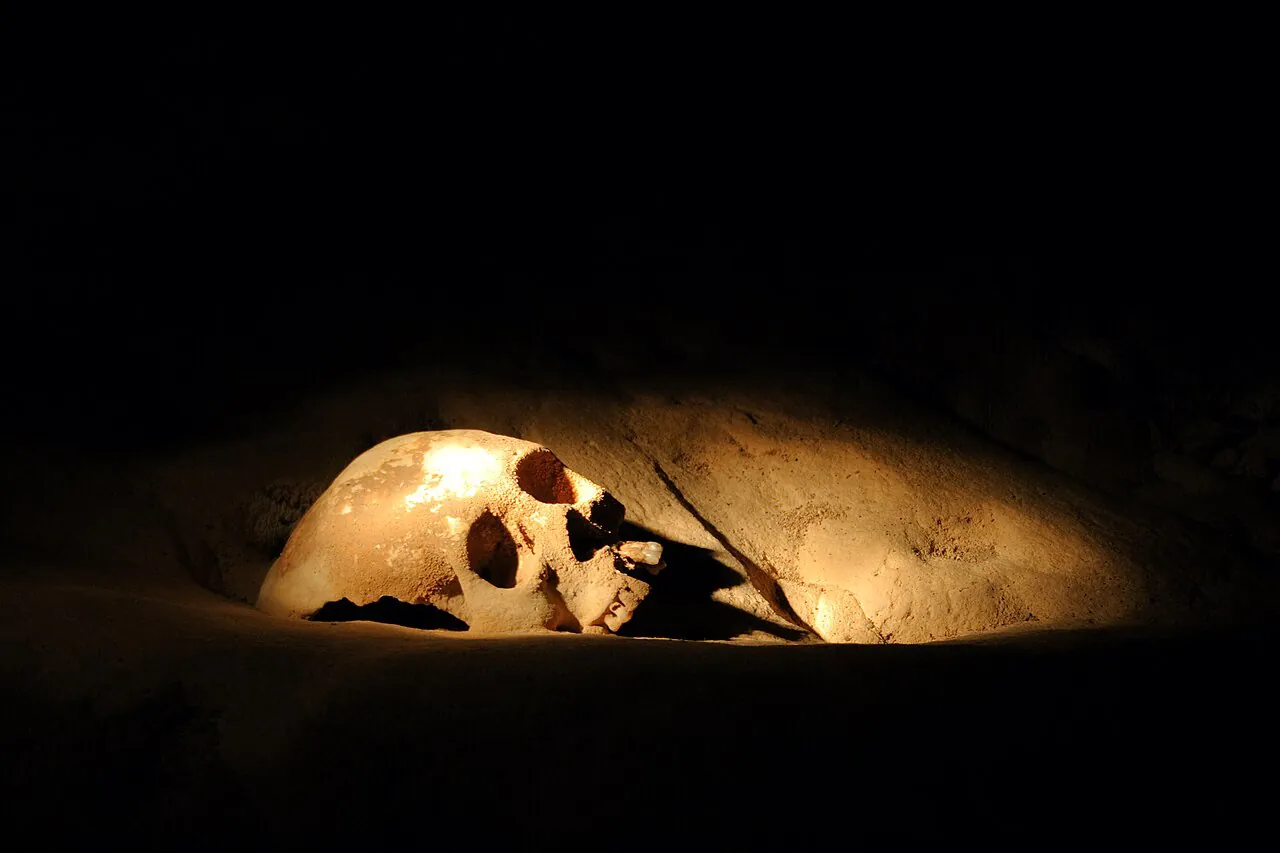
No cameras, phones, GoPros, drones or smartwatches inside. Everything stays locked in the vehicle, and you carry nothing but what is on your back. This is government law, not house policy, and it dates to a dropped camera in May 2012 that chipped a crystalised skull. The resulting ban has held ever since.
Honestly, the cave is better for it. Nobody is composing a shot while you are trying to absorb a chamber the size of a village church, and the group moves at a pace set by the guide rather than by someone hunting for a filter. If you want photographs, the licensed documentary archive held by permitted guides is the legal route, and the inside-the-cave walkthrough describes what each section looks like so you can picture it properly afterwards.
Twenty minutes without a screen, in a place like this, is not a sacrifice. It is the point.
Artifact Protection — Hands Off, Path On, Nothing Removed
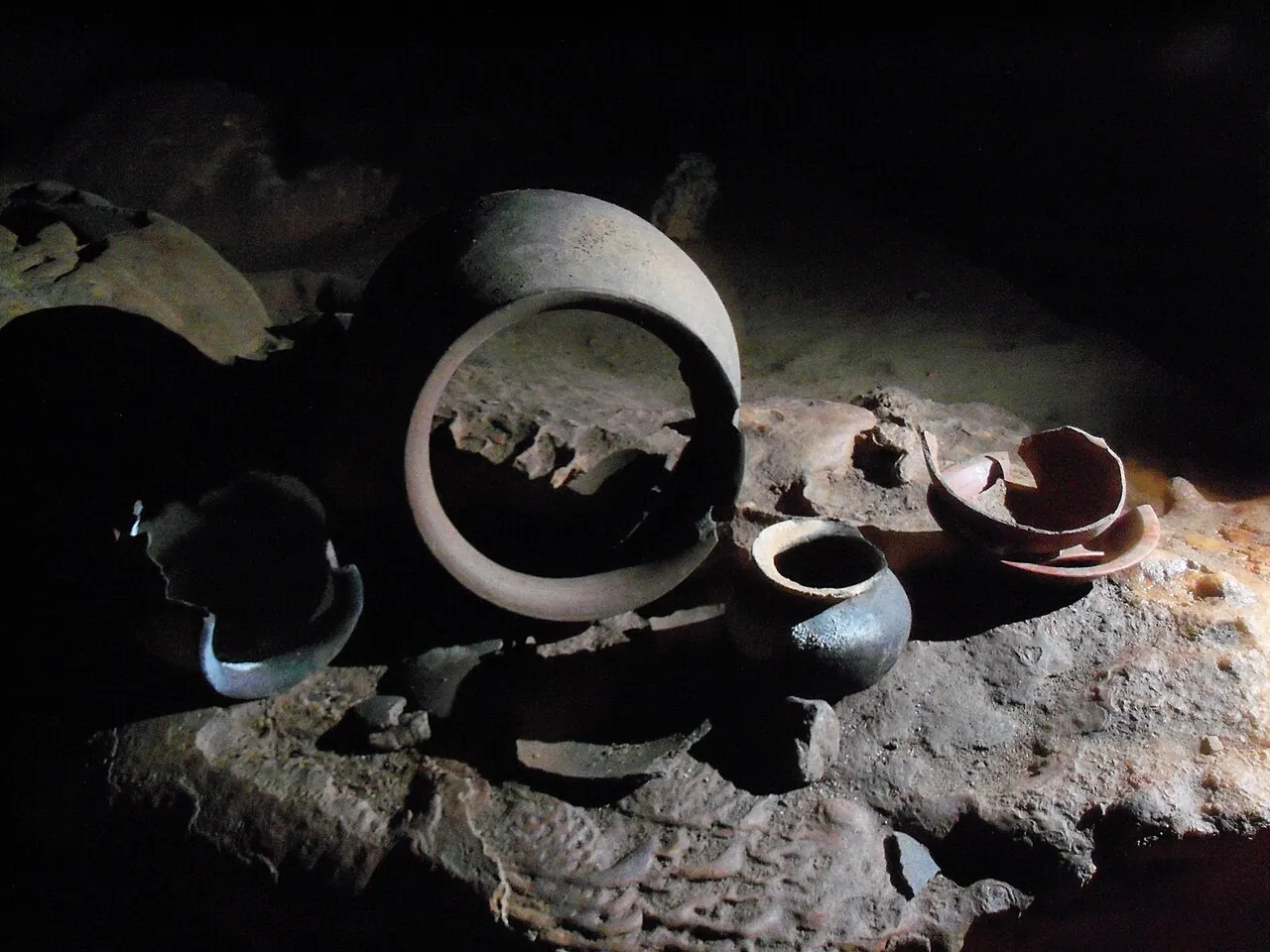
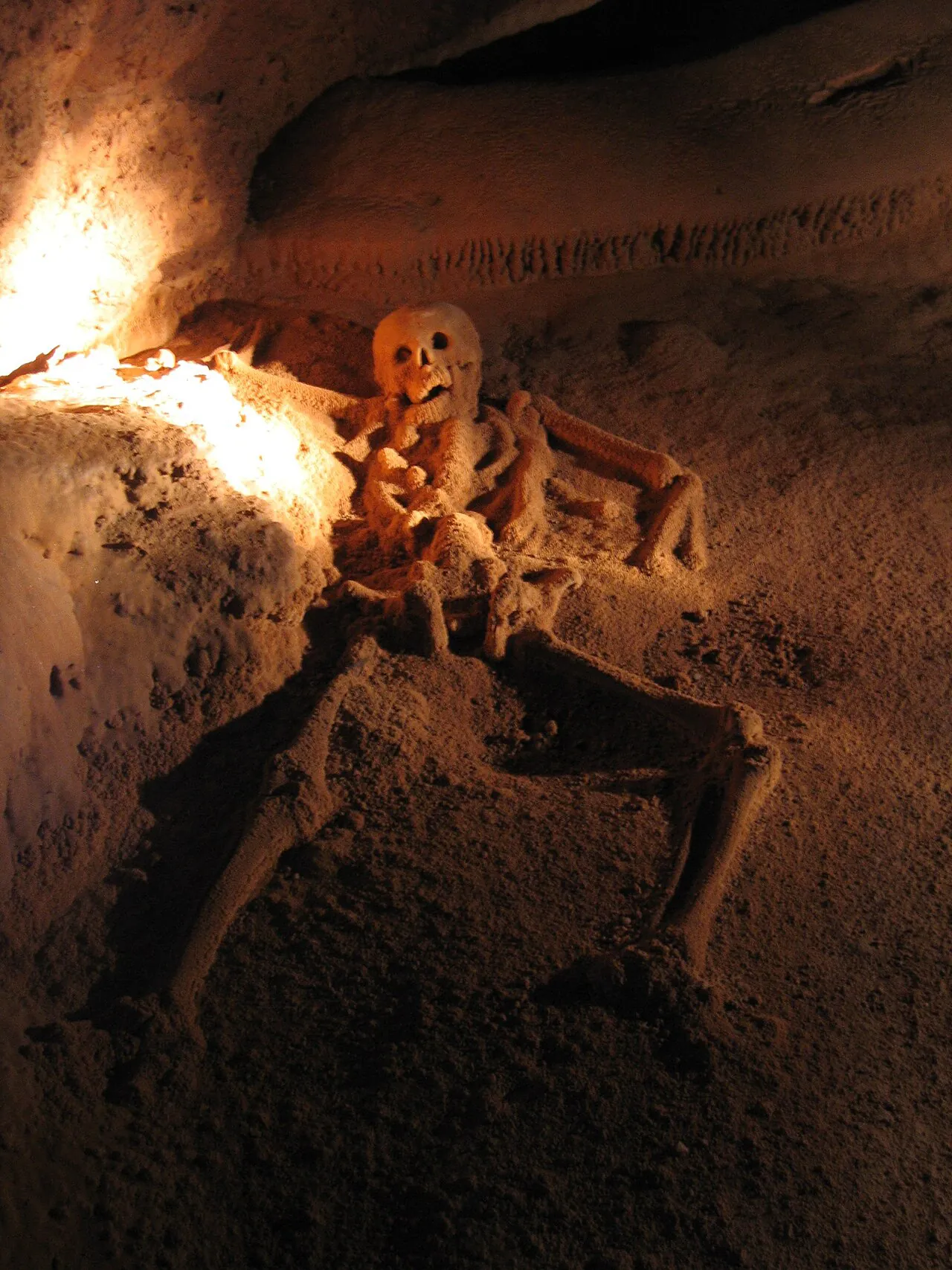
More than 1,400 vessels and 14 skeletons lie in the dry chambers, almost all of them exactly where they were found. Many are cemented to the floor by calcite, which means a “gentle nudge” to see something better is not a nudge at all. It is a break.
Stay on the red tape. No touching, no leaning, no sitting on a ledge, and no steadying yourself on flowstone when you lose balance. The in-situ conservation model adopted after the 1990s excavations is why nothing has been trucked off to a museum, and it only works if visitors behave like guests rather than collectors. Few travellers realise how rare that is: most major Maya sites display reconstructed or relocated material. Here, the original arrangement survives. The Maya history page explains what the pottery and remains actually signify.
The Chemical Ban — Sunscreen, Insect Repellent and Cave Water
No sunscreen and no insect repellent on skin that enters the cave water. Runoff from lotions and DEET damages the ecosystem and, over time, the artefacts themselves, so the rule is applied to the whole body rather than to visible patches.
The workable compromise is clothing. Long sleeves and a hat handle the sun on the 45-minute trail, and you can apply repellent at the trailhead for the mosquitoes and rinse-off will not matter because you are about to get wet anyway. If you are fair-skinned and burn fast, cover up rather than lather up. This is one of the few places where a shirt does more for you than SPF 50.
Group Conduct Inside a Sacred Space
Single file, low voices, no splashing. The temptation to whoop in a chamber with acoustics like a cathedral is real, and guides will gently shut it down. This is not a swimming hole with good lighting; it is a site where people were left as offerings.
At the Crystal Maiden’s alcove the queue dictates everything. Take your turn, keep moving, do not crowd the person in front, and resist the urge to linger for a private moment while six others wait in the dark behind you. On the way out there is an optional neck-deep squeeze that adds a thrill and subtracts five minutes of your life in cold water; a dry bypass exists and nobody is judging.
The Compliance Checklist, in One Place
| Item | Rule | Why It Matters |
|---|---|---|
| Shoes | Closed-toe, real tread | Wet boulders, submerged rocks, ladder grip |
| Socks | Mandatory, thick, one dry spare pair | Calcite floor protection; cold stone underfoot |
| Clothing | Sleeved top, mid-length shorts or trousers | Sacred site respect; sun and insect cover |
| Electronics | None inside, locked in the vehicle | Government ban after a 2012 artefact incident |
| Lotions | No sunscreen or repellent in cave water | Chemical runoff damages formations |
| Hands | Off everything, stay on red tape | 1,400+ artefacts fixed in situ by calcite |
| ID | Physical passport matching the manifest | Ranger checkpoint verification |
| Paperwork | Liability release signed on arrival | Mandatory since the group-size revision |
Read this alongside the what to wear and is-it-worth-it guide for packing, the safety page for fitness and phobia questions, and the transport guide for drive times and pickups. Confirm your operator’s rain-cancellation terms when you book, because river levels can close the cave at short notice and the difference between a refund and a shrug is decided in that email, not on the day.