At 8:05 on a Tuesday morning, the top of El Castillo belonged to me, one groundskeeper, and a pair of motmots. Guatemala sat somewhere behind the treeline to the south, all ridges and haze. Then the first van coughed up the access road, and the summit filled with the sound of somebody asking whether this was the ATM Cave.
It wasn’t, of course. Xunantunich is a city of plazas and lime-plastered stone; Actun Tunichil Muknal is a river that runs through a mountain. For two years, though, I treated every ruin in Cayo as a warm-up act for the cave. Cahal Pech got ninety minutes. Xunantunich got a photo and a smoothie. Caracol got skipped because the drive looked long. That was backwards, and I’d like to save you the eighteen months it took me to work it out.
ATM Cave is the most intense single hour of archaeology in Belize. It is also the least representative thing in the country: it’s a cave, not a city.
Think of the famous cave as one chamber inside a much larger cathedral. The cathedral is the Cayo District: hilltop palaces, carved stelae, canoe caves, granite pools, and the river valleys that linked them all. Once you see the network, the cave stops being a stunt and starts making sense.
Cayo as a network, not a checklist
Maya Cayo ran on two maps at once. On the surface, you had plazas for the living: markets, ballcourts, dynastic propaganda carved into stone. Beneath it lay Xibalba (shi-BAL-bah), the underworld, entered through caves and cenotes. Caves were where you petitioned Chac (Chahk) for rain and where you left offerings for the death gods. Not many visitors realise that the same ruling families who built the palaces also controlled the cave entrances. The two halves were one system.
Geography did the rest. The Macal, Mopan, and Roaring Creek valleys acted as corridors, not backdrops. Cahal Pech sits above the Macal confluence. Xunantunich watches a river crossing that later became a hand-cranked ferry. Caracol pushed south into the pine ridges. And the Actun Tunichil Muknal valley, twenty-odd minutes from Teakettle Village, held a cave with a river running straight through it.
If you want the ritual timeline of the cave itself, the pottery, the calcified bone, and the story of the young woman visitors call the Crystal Maiden, I’ve written that up separately on the Maya history and Crystal Maiden page. This piece stays above ground and regional, because the surface sites are the ones most people rush.
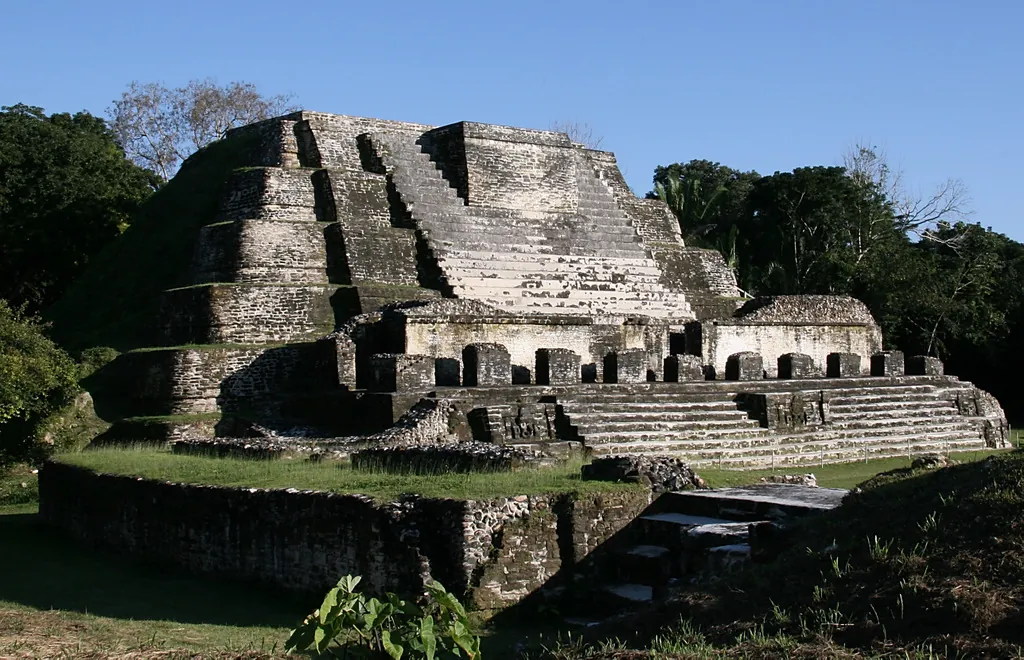
Cahal Pech: the ruin you can walk to from breakfast
Cahal Pech (kah-HAL pech, roughly “Place of the Ticks” in Yucatec Maya) is a royal acropolis sitting inside San Ignacio town. You can leave your guesthouse on Burns Avenue, climb the hill past the Welcome Center, and be standing on a Maya palace roof in under twenty minutes. No van. No ferry. No 6:30 AM alarm.
Entry costs around BZ$10 (roughly US$5, about €4.60) for non-residents, and gates typically run 7:00 AM to 5:00 PM with seasonal variation. Go at opening. The light is soft, the grass is wet, and you’ll have the plaza to yourself until the first tour convoy lands around 9:30. There are around thirty-four structures on site, including a ballcourt and several stelae, and the whole thing takes about ninety minutes at an unhurried pace.
One practical difference worth knowing: surface sites like Cahal Pech cap groups at roughly fifteen visitors per licensed guide. Inside the cave, the cap is eight. That single number explains a lot about why the cave feels crowded and the ruins rarely do.
Xunantunich: the ferry, El Castillo, and the group-size reality
To reach Xunantunich you cross the Mopan River at San Jose Succotz on a hand-cranked ferry. The crossing is free and takes about ninety seconds; the gate on the far side charges around BZ$10 (US$5, roughly €4.60) for non-residents. The ferry runs from early morning, and the queue builds fast after 9:00.
El Castillo is the headline: roughly 40 metres, or 130 feet, of limestone with a frieze on the eastern side that still carries the ghost of red paint. Climb it early. By 10:30 the stairway becomes a single-file shuffle of people in matching lanyards, and the summit platform holds maybe twenty comfortably. I’ve watched forty try.
“Everybody asks me about the cave,” a guide called Marlon told me on the ferry one morning. “Then they stand up there and go quiet. That’s the real thing. The cave is the bonus.”
Right then, the pairing advice. Xunantunich works beautifully with a slow afternoon: lunch in San Ignacio, a wander round the market, a swim at a hotel pool. It does not work well stacked against another ruin, because the heat between 11:00 and 14:00 in Cayo is genuinely punishing and the site has almost no shade on the plazas.
Caracol: the site that eats a whole day
Caracol is Belize’s largest Maya city, and Caana, its main pyramid, rises about 43 metres (141 feet) above the jungle floor. It’s also roughly 40 miles (65 km) south of San Ignacio, most of it on the Chiquibul Road through Mountain Pine Ridge. Budget two and a half hours each way in the dry season. Longer after rain.
Operational limits are the part people miss. The last guided convoy typically leaves for Caracol around 2:00 PM and visitors must be out by roughly 3:00 PM, because you do not want to be on that road at dusk. There’s a military checkpoint at Douglas Da Silva on the way in, and unbridged creek crossings that swell quickly. Independent driving is possible, but I’d only recommend it to someone who has driven unpaved Cayo roads before.
Here’s the honest verdict. Combining Caracol with ATM Cave in a single day is not a bargain, it’s a mistake. The cave runs a single morning wave with no afternoon departures, so the two simply cannot share a day without one of them being ruined. Give Caracol its own dawn start, take a packed lunch, and accept that you’ll be tired and dusty by 6:00 PM.
Barton Creek Cave: the canoe alternative
Not everyone wants to swim into a mountain. Barton Creek Cave, near Santa Familia, is the gentler cave experience: you sit in a canoe while a guide paddles you slowly through a limestone tunnel, pointing out stalactites, ceramics, and the occasional skull resting in an alcove. Kids love it. Nervous swimmers love it. Travellers who get twitchy in confined spaces generally find it manageable, because you can see daylight behind you for the first stretch.
It is still an archaeological reserve, not a theme park. The ritual deposits are real, and guides will ask you to keep your paddle and your voice low near them. Cave entry closes at 4:00 PM, so plan a morning or early afternoon slot. Guided rates typically run US$60 to US$85 per person (roughly €55 to €78) including canoe, guide, and helmet, and you’ll want a change of clothes for the drive back.
Actun Uayazba Kab: the neighbour nobody mentions
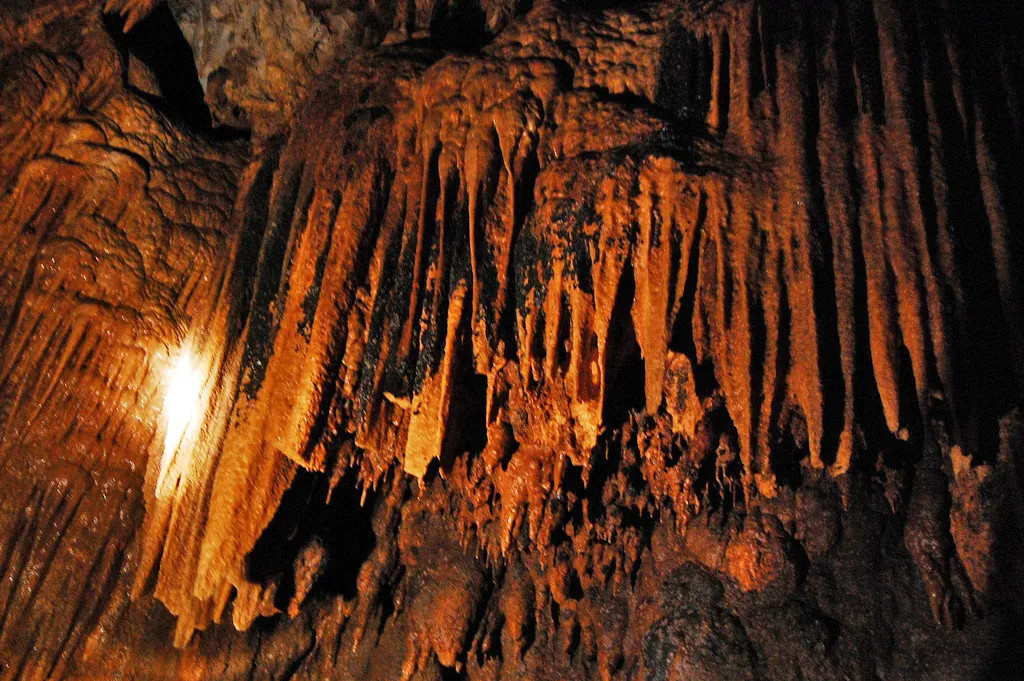
Seven hundred metres north of Actun Tunichil Muknal sits a smaller cave called Actun Uayazba Kab, or Handprint Cave. It holds red ochre handprints and ceremonial deposits from the same ritual landscape, and it is arguably the single best argument for why that particular valley mattered to the Maya.
You cannot walk up and buy a ticket. The site falls within a restricted IUCN Category Ia zone, which means scientific research and carefully controlled access only. Ask your ATM guide about it on the drive in. Most of them light up at the question, and a few have worked on survey projects in the valley.
The Mountain Pine Ridge shift: granite, pine, and open sky
Drive south from San Ignacio and something odd happens to the scenery. Limestone and broadleaf give way to granite, Caribbean pine, and a sky wide enough to feel like a different country. This is Mountain Pine Ridge, and it is the best value day in Cayo for anyone travelling on a budget.
- Rio On Pools: a series of granite cascades and natural plunge pools at roughly 1,600 feet (about 500 metres) above sea level. No separate gate fee in most seasons. Slippery when wet, and the water is bracingly cold.
- Rio Frio Cave: a 65-foot-wide cavern mouth you can walk straight into. No charge, no guide required, and genuinely jaw-dropping for something free.
- Thousand Foot Falls: a lookout over a 1,600-foot drop. Small entry charge, a couple of dollars, and the view is weather-dependent.
- Big Rock Falls: steep steps down, a proper swim, and a scramble back up that will remind you what your quads are for.
Swimming safety note: dry-season levels are gentle, but after heavy rain the pools above the falls get pushy. There are no lifeguards anywhere on the reserve. If the water is brown and moving fast, admire it from the rocks.
Nohoch Che’en and Caves Branch: cave tubing, explained honestly
Cave tubing is the other Belizean cave experience, and it is nothing like ATM. You sit in a rubber inner tube, link ankles with your group, and float down a clear river through a series of caverns at Nohoch Che’en Archaeological Reserve or the Caves Branch system. Helmets and headlamps on, current doing the work. It’s fun, it’s gentle, and children from about five upwards can do it.
Buying on site at Nohoch Che’en through the local guide association usually lands around US$45 to US$55 per person (roughly €41 to €50), which covers tube, helmet, lamp, and guide. Operator packages from San Ignacio run US$75 to US$115 (about €69 to €105) once you add transport and lunch. Both are legitimate; the difference is convenience and whether you want pickup from your hotel door.
The ATM Cave tour does not include tubing. It can’t. You are inside a dry archaeological chamber in socks, and the river outside is a crossing, not a ride.
Every season, somebody books an “ATM Cave and tubing combo” expecting both in one morning. Read the itinerary properly. If a listing promises tubing at Actun Tunichil Muknal, it means the drive past the turnoff, not a float through the archaeology.
Beyond Cayo: what’s worth the drive and what isn’t
Plenty of operators in San Ignacio will sell you a day trip to the cayes. Some of those drives are excellent. Others will eat eight hours of your holiday in a minibus. Here’s how the extensions actually stack up.
| Extension | Region | Transfer from San Ignacio | Honest verdict |
|---|---|---|---|
| Antelope Falls, Bocawina | Stann Creek | ~1 hr 45 min drive | Half-day. Steep rope-assisted scramble near the top; not for flip-flops. |
| Cockscomb Basin Wildlife Sanctuary | Stann Creek | ~2 hr 30 min drive | Overnight if you can. Day-tripping it means four hours of road for three hours of trail. |
| Lamanai | Orange Walk | ~3 hr including boat leg | Long day, genuinely worth it. The river approach is half the experience. |
| Hol Chan Marine Reserve & Shark Ray Alley | Ambergris Caye | ~2 hr drive plus water taxi | Not a Cayo day trip. Add island nights instead. |
| Tikal | Petén, Guatemala | ~30 min to the border, then ~1 hr 30 min to the ruins | Carry your passport. Full day, early start, superb. |
Current reserve fees and sanctuary hours are best checked directly with the Belize Audubon Society, which co-manages Cockscomb, and with the Forest Department for Mountain Pine Ridge access. The Belize Tourism Board keeps the broader regional listings.
Three itineraries that actually work
Rule one, and I will die on this hill: book ATM Cave for your first full morning in Cayo, and keep a spare day behind it. River levels close the cave without warning after heavy rain, and a spare morning is the difference between rebooking and going home disappointed.
3-day version
Day 1: Cahal Pech at 7:00 AM (90 minutes, walkable), then San Ignacio market and an afternoon swim.
Day 2: ATM Cave, 7:00 AM departure, back by 3:00–5:00 PM. Sleep.
Day 3: Xunantunich ferry at 8:00 AM, lunch in Succotz, Rio On Pools on the way home if the weather holds.
5-day version
Days 1–3 as above, with the spare flood buffer sitting quietly on day 3.
Day 4: Caracol, dawn start, out by 3:00 PM.
Day 5: Barton Creek canoe in the morning, Rio Frio Cave and Thousand Foot Falls in the afternoon.
One day, crunched
Skip the cave. There are no afternoon ATM departures, so a single-day visit means Cahal Pech at opening plus Xunantunich before 10:30, then a long lunch. Two sites, one very good day, zero panic about river levels.
Where you sleep matters more than you’d think. San Ignacio works because pickups happen at your door and you’re not losing ninety minutes to a highway transfer at dawn. I’ve written about that properly in why San Ignacio is the best base for Cayo. If you’d rather wake up eight minutes from the trailhead, Pook’s Hill Lodge near Teakettle Village sits in the Roaring River valley and is a two-minute walk from the reserve boundary, which is a genuine advantage on cave morning.
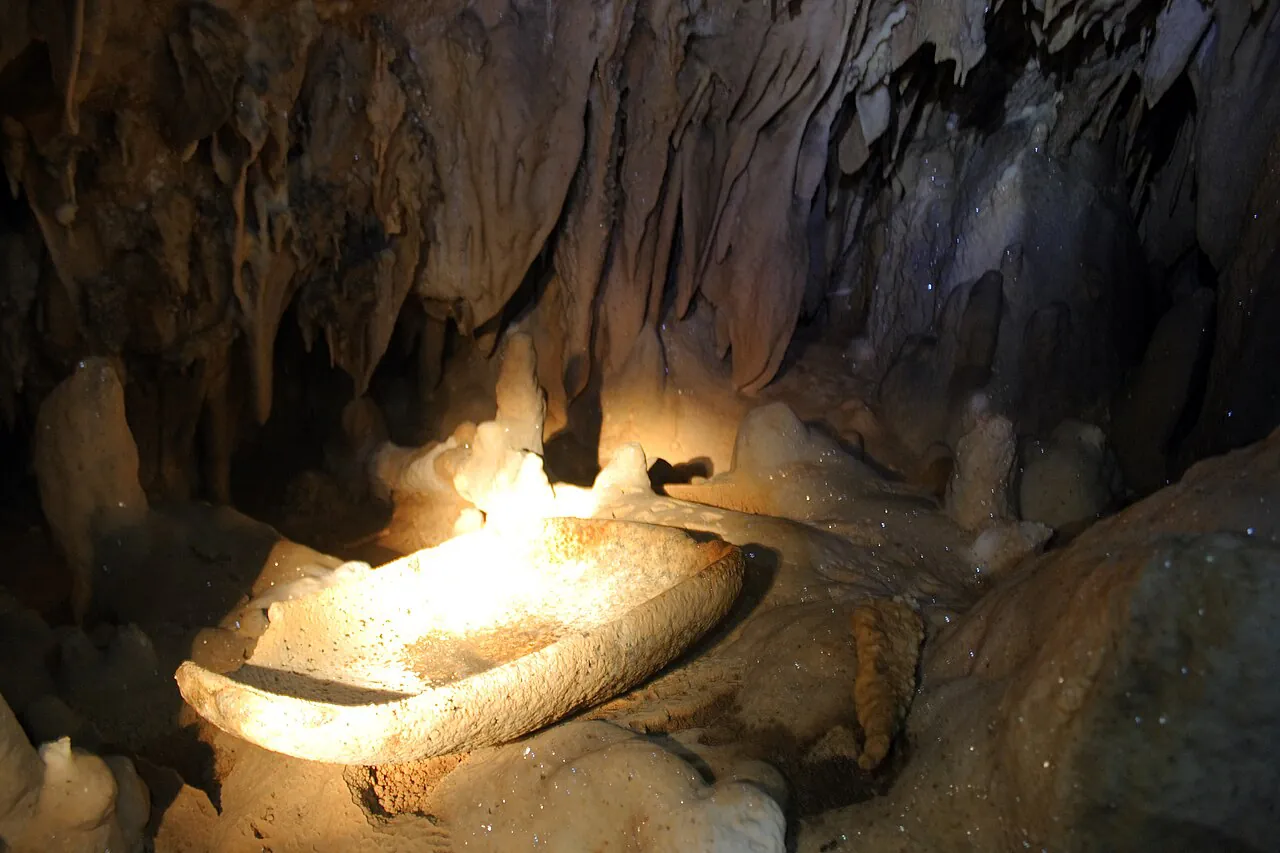
Reading the landscape with a guide
Only 62 guides in the whole of Belize hold the specialist ATM licence, and most lead one group a day. That scarcity is why the good ones are so good, and why the difference between a script and an interpretation is obvious within ten minutes. A script tells you the date of a stela. An interpretation tells you why the stela faces the way it does, and what the ruler who commissioned it was worried about.
- Ask what the site was for, not just what was found there. Guides relax when they get a real question.
- Ask about the valley, not only the cave. The Handprint Cave, the river crossings, and the trail itself are all part of the story.
- Ask about conservation: how the eight-per-guide cap changed things, why socks are mandatory on the calcified floor, why cameras are banned outright.
- Ask what they’d protect first if funding appeared tomorrow. The answers are rarely what you’d expect.
On respectful behaviour, the rules are simpler than the paperwork suggests. Don’t touch the stone; the oils on your fingers do real damage. Stay on the marked path even when it’s awkward. Skip sunscreen and insect repellent before you enter the water, because chemical runoff damages the cave ecosystem. And when a guide asks for silence in the upper chamber, give them silence. It is the single most affecting minute of the day, and it costs you nothing.
If you want the full compliance list, footwear, modesty dress code, the sock rule, the liability waiver, the visitor rules and guidelines page covers it without flannel. Nervous swimmers should read the difficulty, safety and swimming page before booking, and anyone weighing up whether the cave is worth the money will find a straight answer in is ATM Cave worth it.
One last logistical point that catches people out. Cave tickets are sold only in San Ignacio town, to licensed operators. There is no ticket window at the reserve gate, and rangers will turn you away. Budget around BZ$60 (US$30, roughly €28) for the NICH entrance fee, usually folded into a tour price of US$110 to US$160 (about €100 to €145) from town. Confirm the all-in total in writing before you pay, including GST and any pickup surcharge.
Six years in, I still climb El Castillo most Tuesdays. The vans still arrive at 9:30. But now I leave the summit before they do, drive west, and spend the afternoon at a ruin where the only queue is a hand-cranked ferry and a man named Marlon asking whether I’ve finally learned to swim properly. For the official reserve listings and current fees, NICH Belize is the source that actually matters.